

Trade credit insurance: what is it?
Trade credit insurance is a protection that guarantees payment of a company’s invoices in the event of customer default or insolvency. It secures cash flow and limits the risk of unpaid receivables. Discover its different forms, its cost and the key players in the market.
Secure your receivables with trade credit insurance
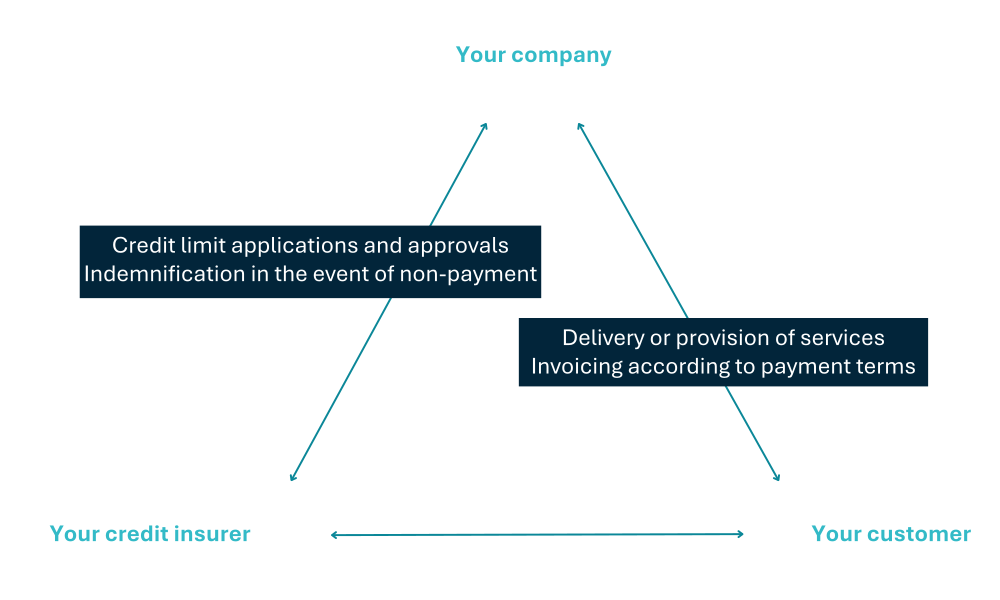
Trade credit insurance protects B2B companies against the risk of customer default and provides cover against unpaid invoices. Beyond guaranteeing payment of trade receivables in the event of insolvency, it is also an information tool that supports your company’s credit management practices. It offers a comprehensive customer risk management service, combining prevention (creditworthiness analysis and monitoring of your customer portfolio) and, where necessary, debt collection or the payment of indemnities.
1. Customer risk prevention
The credit insurer assesses and monitors the financial strength of your customers and prospects in order to anticipate the risk of default. Whether you are approaching a prospect or receiving a new order from an existing customer, you can at any time consult your trade credit insurance provider to determine the level of cover granted.
2. Debt collection
Whether your receivable is insured or not, the management of amicable and/or legal recovery actions to collect your payments is delegated to your trade credit insurer. In practice, you transfer your overdue case to the insurer within the agreed timeframe. For an insured receivable, if your insurer successfully recovers the invoices, the amounts collected are paid back to you. For an uninsured receivable, the insurer charges a service fee based on the amounts recovered.
3. Claims indemnification for unpaid invoices
There are two types of insolvency:
- Presumed: the customer does not pay their invoices without being subject to formal insolvency proceedings. This is simply a payment delay.
- Actual: the customer has entered formal insolvency proceedings (safeguard proceedings, restructuring or liquidation).
In the event of confirmed non-payment, the trade credit insurer indemnifies unpaid invoices from previously approved insured customers, whether they are under insolvency proceedings or still solvent (in bonis).
Trade credit insurance thus helps secure your revenue and margins. It improves your accounts receivable management and supports commercial growth. Your business develops with greater peace of mind.
What are the main types of coverage?
Coverage types define how and under what conditions your customers are covered under your trade credit insurance policy.
Discretionary limit (blind cover)
A coverage amount defined in the contract, for which the insured does not need to request approval from the insurer.
The insured sets their own credit limit freely, without conditions, up to the threshold defined in the policy.
Discretionary limit (with conditions)
A coverage amount defined in the contract, for which the insured does not need to request approval from the insurer to obtain a credit limit, subject to certain conditions such as payment experience, credit agency reports, credit management procedures, etc.
Credit limit
Amount granted by the insurer following a formal request submitted via the insurer’s portal.
The insured specifies their needs based on their outstanding exposure:
- the insurer may grant the full amount, a partial amount, or a temporary limit,
- it may also refuse to provide cover depending on the buyer’s risk profile.
